- Overview
- Trip Outline
- Trip Includes
- Trip Excludes
- Gallery
- Reviews
- FAQ
The Marangu route, also known as the "Coca-Cola" route, is the oldest, most well established route on Kilimanjaro. This is the only route which offers sleeping huts in dormitory style accommodations in lieu of camping. There are 60 bunk beds each at Mandara and Kibo Huts, and 120 bunk beds at Horombo Hut. Guests are supplied with mattresses and pillows, but sleeping bags are still required. The huts have communal dining halls and basic washrooms, ranging from flushing toilets and running water at the lower huts to long drop toilets and buckets of water at Kibo Hut.
Many favor Marangu because it is considered to be the easiest path on the mountain, given its gradual slope and direct path. However the short time frame of the route makes altitude acclimatization fairly difficult. The route approaches Mount Kilimanjaro from the southeast. Marangu is unfortunately less scenic than the other routes because the ascent and descent are along the same path. It is also the most crowded route for that reason.
|
DETAILED ITINERARY |
DAY 1: Arrival at the Airport
Upon arrival at Kilimanjaro or Arusha Airport, your private driver will transfer you to your hotel for dinner and overnight. In the evening, your mountain guide will meet you for a briefing and equipment check to prepare for the climb.
DAY 2: Arusha – Marangu Gate (1,670m) – Mandara Hut (2,720m)
Hiking time: 3 hrs | Distance: 2 km | Habitat: Montane Forest
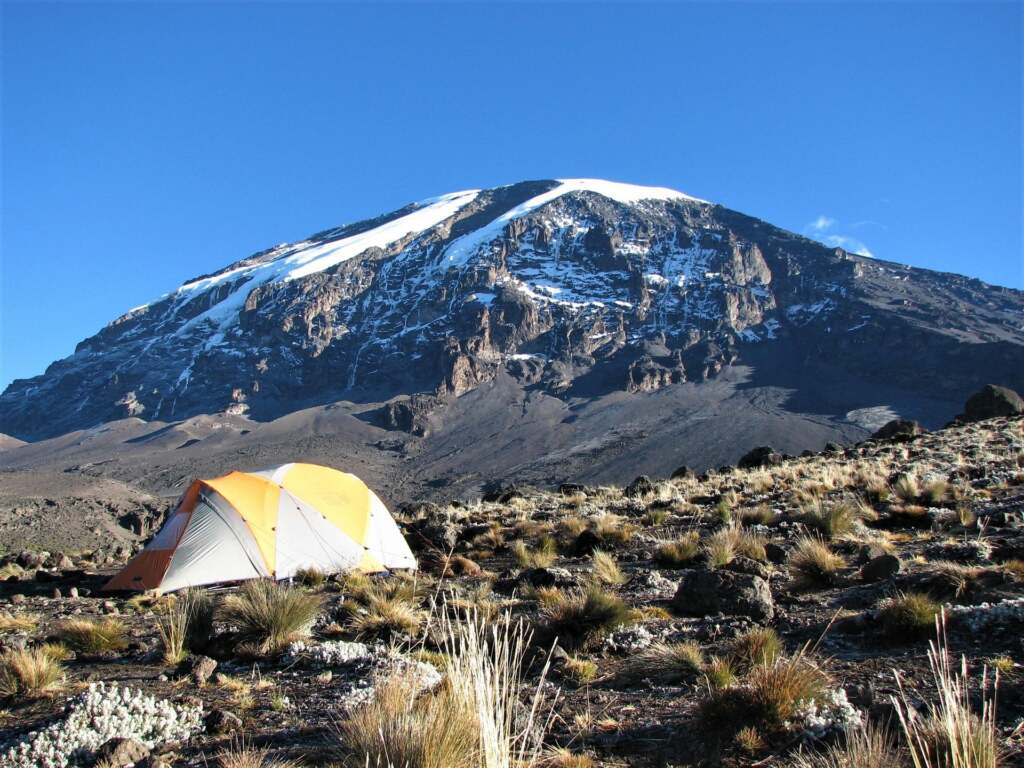
After breakfast, drive to Marangu Gate for registration. Carry a small daypack with essentials such as camera, extra clothing, rain jacket, and skin oil. Porters will carry your main gear, food, and cooking supplies. Begin your ascent along a cleared ridge through misty rainforest, following a stream through moss-covered undergrowth. After about three hours, arrive at Mandara Hut. The huts feature solar lighting, flush toilets, and piped water. Evening temperatures are mild, and standard layers are sufficient.
DAY 3: Mandara Hut – Horombo Hut (3,720m)
Hiking time: 8 hrs | Distance: 11 km | Habitat: Moorland
After breakfast, begin the climb toward Horombo Hut with your picnic lunch. The trail passes a short stretch of forest before entering open moorland near Maundi Crater. Optional detour to the crater rim offers breathtaking views of Kibo Crater and glaciers. In the moorlands, encounter giant lobelias and groundsel, some up to 5 meters high. Arrive at Horombo Hut in the afternoon for acclimatization, dinner, and overnight. Night temperatures can reach freezing.
DAY 4: Acclimatization at Horombo Hut (3,720m)
Spend the day acclimatizing with a hike toward Mawenzi Peak. The hike takes about 1.5 hours each way and significantly improves your chances for a successful summit. Return to Horombo Hut for dinner and overnight.
DAY 5: Horombo Hut – Kibo Hut (4,720m)
Hiking time: 6 hrs | Distance: 8 km | Habitat: Alpine Desert
Begin the climb to the Saddle between Mawenzi and Kibo, following the lower route past the last water point. Ascend gradually through the alpine desert over 5–7 hours to reach Kibo Hut. Temperatures vary widely—below freezing at night and warm during the day. Prepare summit gear, thermal clothing, headlamp, and extra batteries. Early bedtime is essential for the midnight summit attempt.
DAY 6: Kibo Hut – Uhuru Peak (5,895m) – Horombo Hut (3,720m)
Hiking time: 8 hrs ascent / 7 hrs descent | Distance: 11 km | Habitat: Scree & Snow
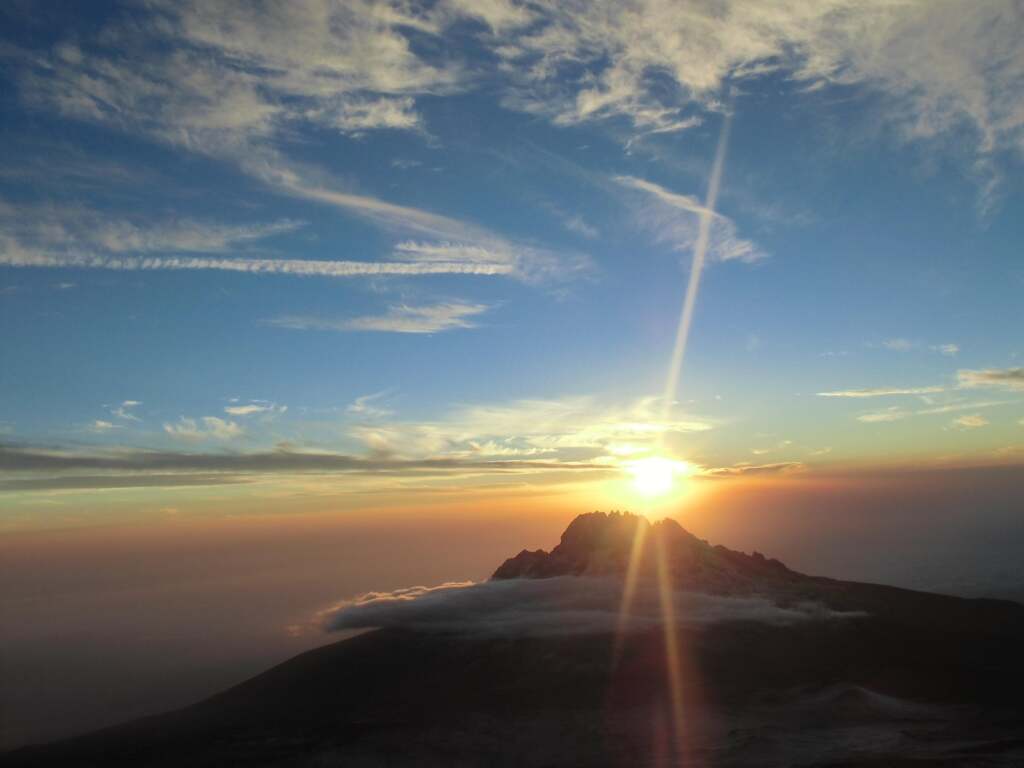
Wake before midnight for the final ascent. Climb to Hans Meyer Cave (5,150m), then to Gillman’s Point (5,685m). The steep rocky section is demanding; proceed slowly. From Gillman’s Point, continue through snow to reach Uhuru Peak. Celebrate at the summit, then descend to Kibo Hut for a short rest and brunch. Continue descending to Horombo Hut for dinner and overnight.
DAY 7: Horombo Hut – Marangu Gate (1,670m)
Hiking time: 7 hrs | Distance: 9 km | Habitat: Moorland & Rainforest
After breakfast, descend through moorland and rainforest, passing Mandara Hut to reach Marangu Gate. Sign the register and receive your summit certificate: green for reaching Gillman’s Point, gold for Uhuru Peak. Enjoy a hot celebratory lunch with your mountain crew. Transfer to a hotel in Moshi or Arusha for a hot shower, dinner, and overnight, or continue directly to Kilimanjaro Airport for your flight home.
- 1st Night accommodation when arrived.
- All camping equipment (including tents, mattress, sleeping bags, & pillows)
- private mountain guide
- private chef
- porters
- trekking poles
- first aid kit
- rescue fees
- portable toilet
- Kilimanjaro National Park Fees & camping fees
- All Government Tax.
What’s not included?
- Other trekking gears except trekking poles
- Tips
- Personal items (souvenirs, travel insurance, visa fees and other personal items)
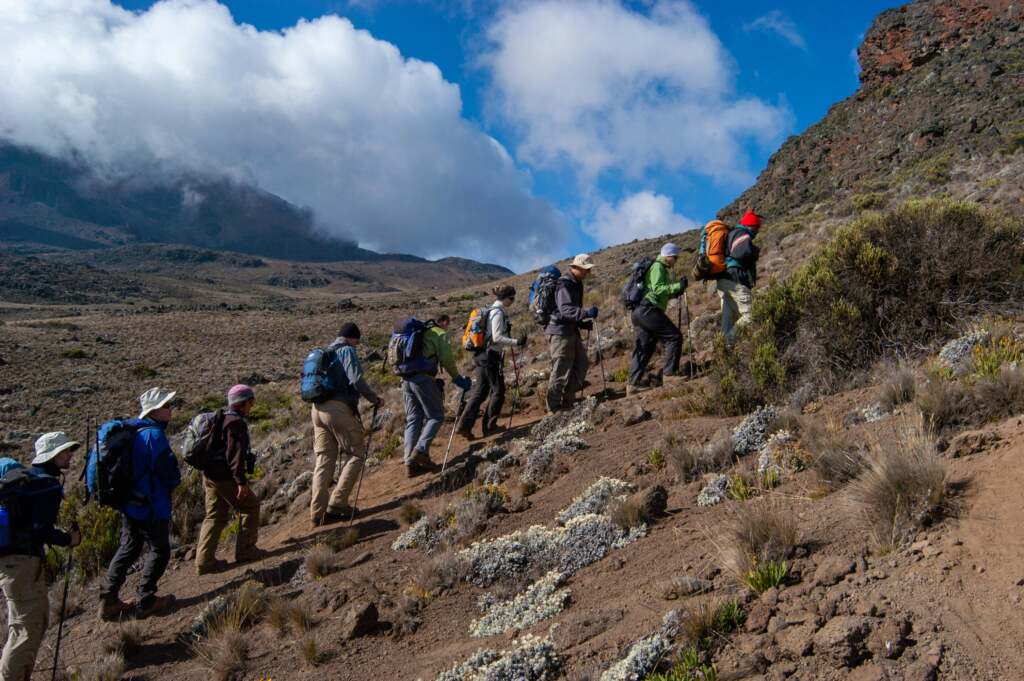
Climbing Kilimanjaro is considered moderately challenging. It is a non-technical trek, meaning no climbing skills are required, but the altitude, long trekking days, and summit night make it physically demanding.
No. Mount Kilimanjaro is a trekking peak, not a technical climb. However, good physical fitness and mental preparation are essential.
Related Trips
There are no reviews yet.